Rule34 Explained: Meaning, Origin, and Online Safety
Rule34 shows up everywhere in internet culture, but it’s often misunderstood. At its core, it’s a meme-like “rule” that jokes: if something exists, someone online has probably made adult content about it. Sounds simple—yet the conversation around rule34 quickly touches fandom, platforms, privacy, and consent.
What is Rule 34, really?
What does rule34 mean?
Rule 34 is an internet meme saying that adult content exists for virtually any topic. It’s commonly associated with fan-made art of normally non-erotic characters or worlds being sexualized—often shared across niche communities.
Is Rule 34 a “law” of the internet?
Not an actual law—more like folklore. It’s part of the broader “Rules of the Internet” meme culture and gets repeated because it’s shocking, funny, and weirdly consistent with how fandoms behave online.
“I thought it was a site at first. Then I realized it’s more like a concept people use to explain fandom chaos.”
— NeonCactus
Where did rule34 come from?
Where did rule34 come from? (origin in plain English)
The phrase is widely traced to an August 13, 2003 webcomic captioned “Rule #34 There is porn of it. No exceptions.” From there, it spread as a shorthand joke across forums and fandom spaces.
Why do people connect it to 4chan?
Because early meme culture and “Rules of the Internet” style lists circulated heavily on anonymous imageboards. Communities like that were built for fast-sharing, remixing, and amplifying internet folklore.
“Rule34 didn’t create fandom behavior—it named it. Once you name a thing, it spreads faster.”
— Dr. Maya Henderson, Digital Culture Researcher (hypothetical)
Rule34 vs “rule34 sites” vs “rule34 party”
People search these terms with different goals, so it helps to separate the meme from the websites and “brand” queries.
- Rule 34 (the meme): the idea itself.
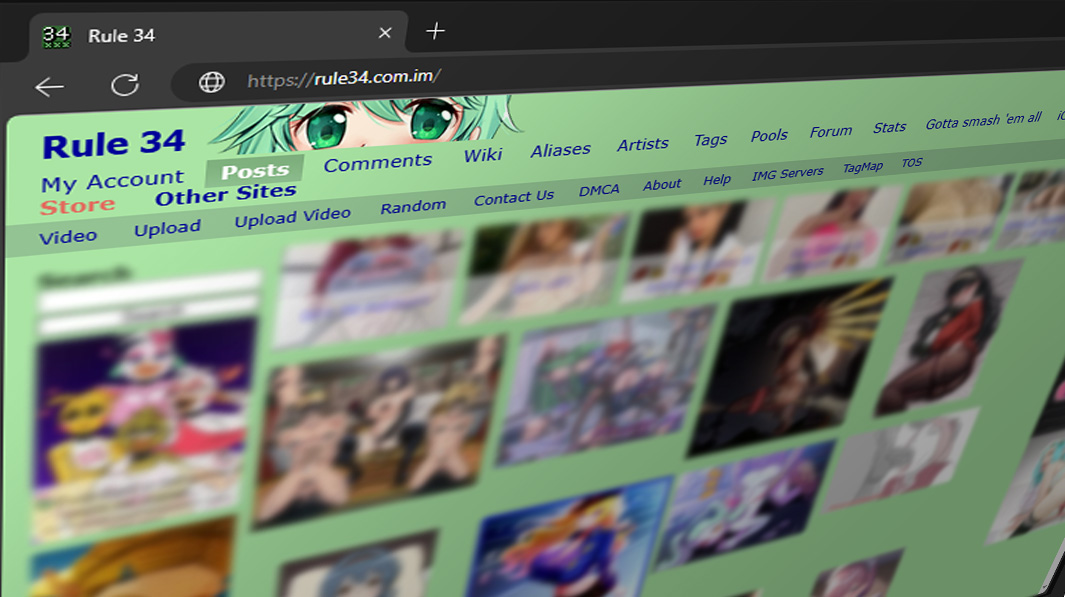
- rule34 site / rule34 new website: usually refers to tag-based image databases that index user uploads.
- rule34 party: often a navigational query for a specific adult-content site with that branding.
- rule34 twitter: people looking for how the term is used on social platforms (often via slang, tags, or screenshots).
What is a “rule34 character”?
In fandom slang, it’s a character who has been sexualized in fan-made adult content—whether the original media is adult or totally PG. That’s why you’ll see “rule34 meaning” paired with specific franchises.
“When people say ‘rule34 character,’ they usually mean ‘this fandom has adult fan art of them.’ It’s more about the community than the canon.”
— Samir Patel, Trust & Safety Consultant (hypothetical)
Why “rule34 furry” and “rule34 japan” are common searches
- rule34 furry: furry communities have long histories of commissions, fan art, and tagging systems, so the keyword often appears in those circles.
- rule34 japan: can reflect interest in anime/manga fandoms, Japanese creator platforms, or how different communities label adult fan works.
The key point: search intent is often curiosity plus fandom, but results can be explicitly adult and not always well moderated.
A quick comparison of related platforms and terms
| Term / Platform | What it usually means | What people use it for | Main risks |
|---|---|---|---|
| Rule 34 | An internet meme / concept | Explaining “adult fan content exists for everything” | Misunderstanding, accidental NSFW exposure |
| rule34 sites | Tag-based adult-content databases | Searching user-uploaded explicit fan content | Explicit material, spoilers, sketchy ads, privacy risk |
| rule34 party | Often a specific adult-content website query | Navigational intent (find a particular site) | Untrusted domains, tracking, malware risk |
| Kemono / Kemono.party | Often described as an archive of reposted creator posts | Finding reposted subscription content | Copyright/ethics concerns; takedown complaints exist |
Note on Kemono: it’s frequently described as reposting content from creator-supported platforms, which is why it’s often discussed alongside copyright and ethics concerns.
How to explore the topic safely (without unwanted surprises)
How can I avoid accidentally opening explicit rule34 content?
Use SafeSearch, block adult domains, and avoid clicking image results blindly. If you’re researching the meme, stick to definitions and history pages. Many “rule34” navigational results lead to explicit material immediately.
Step-by-step: safer research mode
- Search for “Rule 34 meaning” or “Rule 34 origin” (not just “rule34”).
- Prefer encyclopedia-style sources over image results.
- Turn on SafeSearch (and keep it on).
- Avoid downloading files from unknown sites.
- If you’re under the legal age for adult content where you live, don’t seek or engage with NSFW material.
Quick checklist
- Do read about history and context first.
- Do treat unknown “rule34 new website” results as high risk.
- Don’t assume “trending on Twitter” means “safe to click.”
- Don’t share or repost someone’s private or leaked content.
“The biggest mistake is treating adult-content sites like normal social platforms. Assume tracking, assume aggressive ads, and protect your privacy accordingly.”
— Elena Ross, Online Privacy Educator (hypothetical)
The ethics conversation people skip (but shouldn’t)
Rule34 discussions aren’t only about “does it exist?”—they’re also about consent, copyright, and harm.
- Consent & boundaries: fictional content can still be socially messy when it targets real people or crosses community lines.
- Copyright & creator support: reposting paywalled content hurts creators; it’s not just “internet drama,” it’s real livelihood impact.
- Community impact: fandom spaces can become hostile when adult content is pushed into general-audience areas.
“I’m not anti-fanart. I’m anti-‘surprise NSFW’ in spaces where people didn’t sign up for it.”
— OrbitReader
Conclusion
Rule34 is a long-running internet meme with roots in early-2000s web culture, and it still shapes how people talk about adult fan content today. If you’re researching rule34, focus on meaning and history first, use safety tools, and keep ethics in mind—especially when reposted content is involved.
FAQ
1) What does rule34 mean in simple terms?
It’s a meme that claims adult content exists about basically anything—especially as fan-made art or media.
2) Where did rule34 come from?
It’s widely traced to a 2003 webcomic caption that helped popularize the idea, which then spread across forums and fandom spaces.
3) Is Rule 34 the same as a rule34 site?
No. Rule 34 is the concept; “rule34 sites” are websites that host or index user-uploaded adult content.
4) What is rule34 party?
Often a navigational search for a specific adult-content site branded around “rule34.” Results vary, so treat unknown domains cautiously.
5) Why do people search “rule34 furry” so much?
Because furry fandoms often use detailed tagging and community sharing, so the keyword appears frequently in that ecosystem.
6) Is Kemono related to rule34?
Not directly. It’s more commonly discussed as a reposting/archiving space for paywalled creator content, which raises legal and ethical concerns.
7) Is rule34 content illegal?
It depends on jurisdiction and what content is involved. The safest approach is to avoid anything exploitative or non-consensual, respect copyright, and follow platform rules.